Your air conditioner breaks down at the worst possible times. It’s 95 degrees outside, humidity is suffocating, and suddenly your AC stops blowing cold air. But is this truly an emergency, or can it wait until regular business hours?
Understanding what constitutes an emergency aircon repair situation can save you money, prevent further damage to your system, and most importantly, keep your family safe and comfortable. Not every AC problem requires an immediate service call, but some issues demand urgent attention to prevent health risks, system failure, or even fire hazards.
Let’s break down the seven clear signs that your air conditioning problem can’t wait.
1. Complete System Failure During Extreme Heat
When your AC stops working entirely during a heatwave, this is a genuine emergency. If outdoor temperatures exceed 90 degrees Fahrenheit and your system won’t turn on at all, you’re facing more than just discomfort.
Extreme indoor heat poses serious health risks, especially for young children, elderly family members, and anyone with respiratory conditions or heart problems. Heat exhaustion and heat stroke can develop quickly in homes without proper cooling.
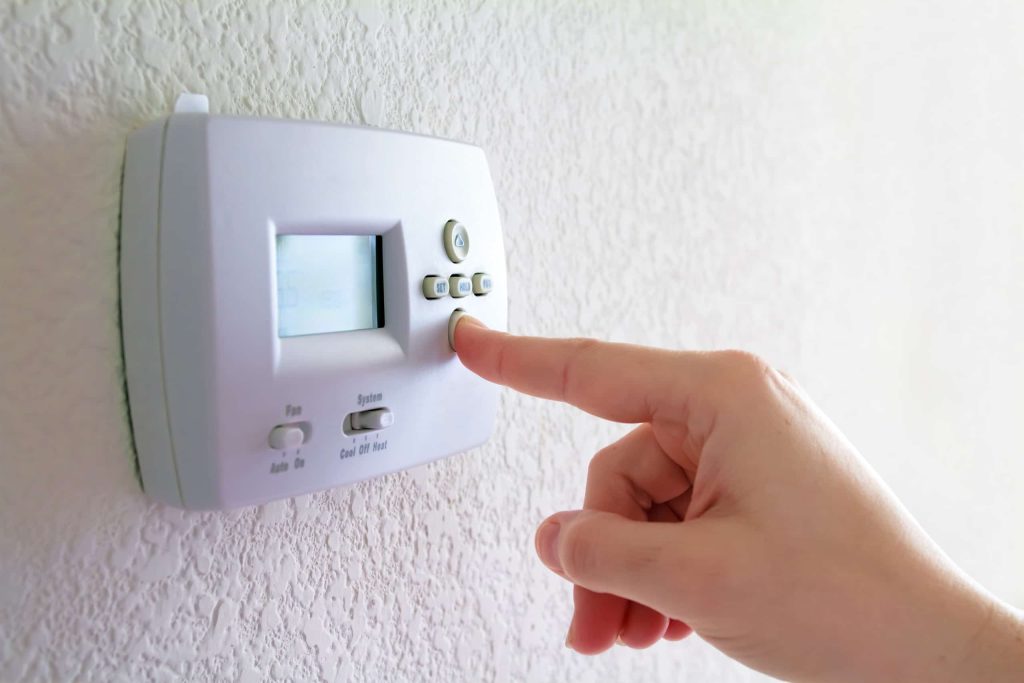
Before calling for emergency aircon repair, check these basics: Is the thermostat set correctly? Did a circuit breaker trip? Is the outdoor unit receiving power? If you’ve ruled out these simple fixes and your system remains dead, you need immediate professional help.
2. Burning Smell Coming From Your AC Unit
If you smell something burning when your air conditioner runs, turn off your system immediately. A burning odor can indicate several serious problems, some of which pose fire risks.
A slight dusty smell when you first turn on your AC after months of inactivity is normal—that’s just accumulated dust burning off components. This smell should disappear within 15 to 20 minutes.
However, if you notice a persistent burning smell, especially one that smells like burning plastic, melting rubber, or electrical components, you’re dealing with a potential emergency. Common causes include:
- Overheating motors or compressors
- Electrical shorts or faulty wiring
- Damaged capacitors producing excessive heat
- Worn fan belts creating friction
- Melting insulation on electrical components
A burning electrical smell combined with sparking sounds or visible smoke constitutes an immediate emergency. Don’t try to diagnose this yourself. Shut down your system at the breaker and call for emergency AC repair right away. Continuing to run a unit with electrical problems can cause catastrophic damage or start a fire.
3. Refrigerant Leak With Health Symptoms
Refrigerant leaks represent both an equipment emergency and a health concern. While modern refrigerants like R-410A are less toxic than older varieties, exposure to high concentrations in poorly ventilated spaces can cause serious symptoms.
Signs of a refrigerant leak include:
- Hissing or bubbling sounds near your indoor or outdoor unit
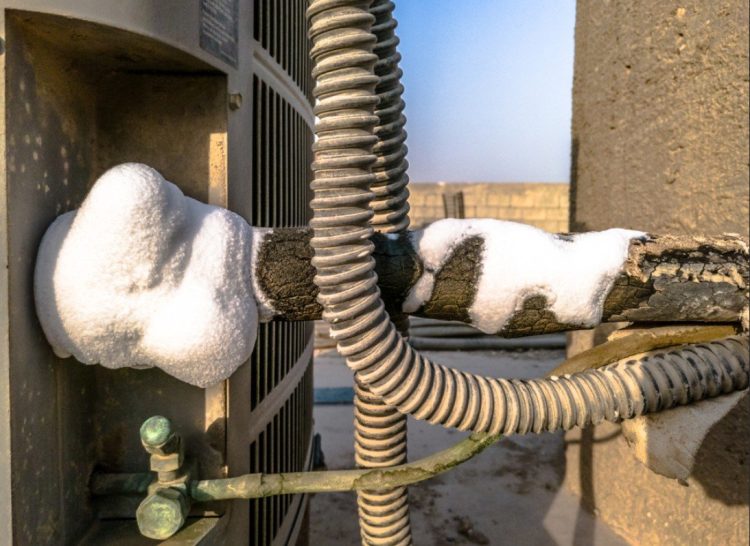
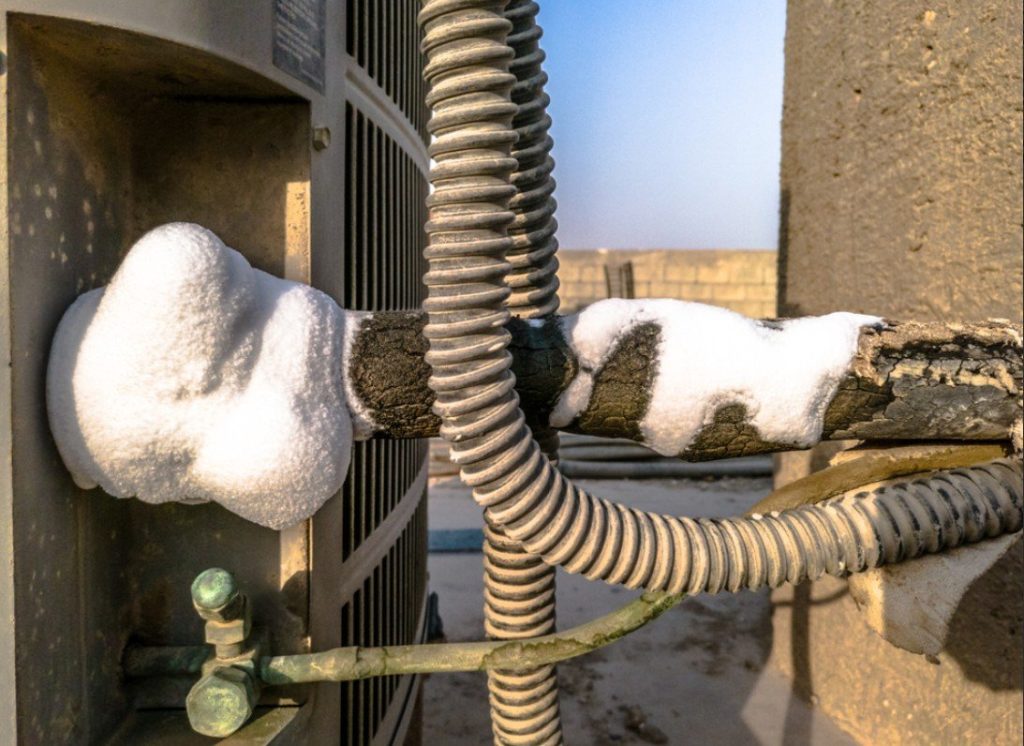
- Ice formation on your evaporator coils
- Your AC blowing warm air despite running constantly
- A sweet, chemical smell near your system
- Reduced cooling performance with longer run times
The emergency aspect intensifies if anyone in your household experiences these symptoms:
- Dizziness or lightheadedness
- Nausea or vomiting
- Difficulty breathing or shortness of breath
- Headaches or loss of coordination
- Eye or skin irritation
If you suspect a significant refrigerant leak and notice any of these health symptoms, evacuate to a well-ventilated area and contact emergency services. Then arrange for urgent AC repair. Refrigerant leaks don’t just reduce cooling efficiency—they can compromise your family’s health and harm the environment.
4. Water Flooding or Major Leaks
Water pooling around your indoor air handler or flooding from your AC unit demands immediate attention. While some condensation is normal, excessive water indicates a serious malfunction.
Your air conditioner naturally produces condensation as it removes humidity from indoor air. This moisture should drain away through your condensate line into a designated area. When this system fails, you can quickly face significant water damage.
Emergency water issues include:
- Water actively flooding from your indoor unit
- Large puddles forming rapidly under your air handler
- Water staining on ceilings or walls near your AC
- Overflowing condensate pans that won’t drain
The longer water leaks, the more damage occurs. Water can ruin flooring, damage drywall, promote mold growth, and even compromise electrical components. A clogged condensate drain line can usually be cleared quickly by a professional, but running your system while water floods your home will only multiply the damage and repair costs.
Turn off your AC and contact an emergency service if you’re dealing with active water leaks. Even if it’s late at night or the weekend, water damage escalates fast.
5. Electrical Issues: Tripped Breakers, Burning Smells, or Sparks
Electrical problems with your air conditioning system aren’t just inconvenient—they’re dangerous. If your AC repeatedly trips circuit breakers, produces sparking sounds, or shows signs of electrical failure, you need emergency repair.
Here’s why electrical issues can’t wait:
Your AC draws significant power, especially when the compressor kicks on. A system that repeatedly trips breakers is either drawing excessive current due to a failing component, or there’s a short circuit somewhere in the system. Either scenario can damage your electrical panel, start a fire, or cause a complete system failure.
Warning signs of electrical emergencies include:
- Circuit breakers that trip immediately when AC turns on
- Buzzing or crackling sounds from the unit
- Burning plastic or electrical smells
- Lights dimming when the AC starts
- Visible sparks or arcing near electrical connections
- Smoke coming from indoor or outdoor units
Never attempt to reset breakers repeatedly or bypass safety mechanisms. If your system is experiencing electrical problems, shut it down at the main breaker and call for emergency aircon repair services. Electrical failures can worsen rapidly and pose genuine safety hazards.
6. Strange Mechanical Noises: Grinding, Screeching, or Banging
Your air conditioner should run with a relatively quiet, consistent hum. Sudden loud noises indicate mechanical failure that requires urgent attention—especially if those noises suggest metal-on-metal contact or catastrophic component failure.
Pay attention to these emergency sound indicators:
Grinding noises suggest metal components rubbing together without proper lubrication. This could mean worn motor bearings or a failing compressor. Left unaddressed, grinding components can seize completely, turning a moderate repair into an expensive replacement.
Screeching or squealing often indicates a failing motor bearing or a worn belt about to snap. A belt-driven component running without its belt can damage motors and other connected parts.
Loud banging or clanking usually means something has come loose inside your unit—a serious problem that can cause extensive damage if components strike each other while the system runs.
Hissing sounds combined with poor cooling suggest refrigerant escaping under pressure through a leak.
While minor clicking or buzzing might wait for regular service hours, loud mechanical noises that suggest imminent component failure constitute an emergency. Continuing to run your system with these sounds can transform a repairable problem into a complete system replacement. Turn off your AC and get professional help immediately.
7. Complete Loss of Cooling During Health-Critical Situations
Sometimes the emergency isn’t just about your equipment—it’s about the people depending on that equipment. If someone in your household has a medical condition that requires climate control, a complete loss of cooling becomes a health emergency regardless of outdoor temperature.
Certain medical conditions and situations make air conditioning a necessity rather than a luxury:
- Infants and young children are especially vulnerable to heat-related illness
- Elderly individuals with compromised temperature regulation
- Anyone with heart disease or respiratory conditions like ASTHMA or COPD
- People recovering from surgery or serious illness
- Anyone taking medications that affect body temperature regulation
- Individuals with multiple sclerosis or other conditions worsened by heat
In these situations, even a “normal” AC breakdown becomes urgent. While others might manage with fans and cold drinks, these vulnerable individuals need functioning air conditioning to maintain their health and safety.
If you’re in this category, don’t hesitate to call for emergency service. Many HVAC companies prioritize these calls, understanding that for some families, a broken AC isn’t just uncomfortable—it’s genuinely dangerous.
What Isn’t Usually an AC Emergency?
Understanding what doesn’t require immediate emergency service can save you from unnecessary after-hours fees. These issues, while still needing attention, can typically wait for normal business hours:
- Reduced cooling efficiency that develops gradually over days or weeks
- Slightly higher energy bills without other symptoms
- Minor water condensation around outdoor units on humid days
- Occasional short cycling that resolves itself
- A musty smell that’s persistent but not worsening
- Rooms cooling unevenly when the system is still functioning
These problems indicate your AC needs service, but they don’t pose immediate safety risks or threaten complete system failure. Schedule a regular service appointment rather than paying emergency rates.
What to Do Before Calling for Emergency Service
Even in an emergency, taking a few minutes to troubleshoot can potentially save you an expensive service call. Try these quick checks:
- Verify power – Check that circuit breakers haven’t tripped and the disconnect switch near your outdoor unit is on
- Examine the thermostat – Ensure it’s set to “cool” with a temperature below current indoor temperature, and replace batteries if needed
- Inspect the air filter – A completely clogged filter can cause some systems to shut down as a safety measure
- Check for ice – If your indoor coils are frozen, turn off the AC and let them thaw (this takes several hours)
- Clear debris – Remove any leaves, grass clippings, or debris blocking your outdoor unit
If these simple checks don’t resolve the problem, it’s time to call the professionals.
The Real Cost of Delaying Emergency Repairs
You might be tempted to “tough it out” until regular business hours to avoid emergency service fees. While this makes sense for minor issues, delaying true emergencies often costs more in the long run.
A small refrigerant leak can damage your compressor, turning a $300 repair into a $2,000 replacement. Running a system with failing bearings can destroy your motor. A clogged drain line that you ignore for “just one more day” can cause thousands in water damage.
Emergency AC repair costs typically include a higher service call fee—but that premium pays for immediate response when you genuinely need it. When you’re facing a real emergency, the cost of waiting usually exceeds the cost of after-hours service.
Preventing Future AC Emergencies
Most air conditioning emergencies are preventable with proper maintenance. Here’s how to minimize your risk:
- Schedule annual professional maintenance before cooling season begins
- Change your air filter monthly during heavy use periods
- Keep outdoor units clear of vegetation, debris, and obstructions
- Address small issues promptly before they escalate
- Install a smart thermostat to monitor system performance
- Consider a maintenance plan that includes priority emergency service
Regular maintenance doesn’t just prevent emergencies—it extends your system’s life, improves efficiency, and helps you avoid uncomfortable breakdowns during the hottest days of summer.
When You Need Reliable Emergency Service
Recognizing a true AC emergency is the first step. The second is knowing who to call when disaster strikes. You need a company that responds quickly, diagnoses accurately, and fixes problems right the first time—especially when you’re calling at 11 PM on a Saturday night.
Look for emergency air conditioning services that offer:
- True 24/7 availability, not just an answering service
- Experienced, licensed technicians who can handle any problem
- Transparent pricing with no surprise fees
- Fully stocked service vehicles to complete repairs immediately
- A reputation for reliability and honest service
Don’t wait for an emergency to find out whether your HVAC company really provides emergency service. Research your options now, save contact information, and know who to call when you need help fast.
Experience a genuine AC emergency in Cincinnati or Northern Kentucky? Don’t suffer through dangerous heat or risk further damage to your system. Explore our professional air conditioning repair services for fast, reliable emergency response, or call us directly at (859) 441-7161 for immediate assistance. Since 1953, Arc Electric has provided honest, expert HVAC service without pushy sales tactics—just solutions when you need them most.


6 comments on “What Counts as an AC Emergency? 7 Signs You Need Immediate Repair”