Total Water Heater Replacement Costs in 2026
When your hot water stops flowing, the immediate question is simple: what is this going to cost me? In 2026, the national average for a fully installed Water Heater Replacement ranges between $1,200 and $4,500.
The overall price tag reflects two major components: the physical equipment and the professional labor required to safely set it up. Below is a snapshot comparing average installed costs, equipment costs, and life expectancy across different units.
| Water Heater Category | Equipment Cost Alone | Total Installed Cost (2026) | Typical Lifespan |
|---|---|---|---|
| Standard Electric Tank | $400 – $750 | $700 – $1,500 | 10–12 Years |
| Standard Gas Tank | $500 – $900 | $900 – $1,800 | 8–12 Years |
| Tankless Electric | $400 – $700 | $1,500 – $3,000 | 15–20 Years |
| Tankless Gas | $700 – $1,800 | $2,500 – $4,500 | 15–20 Years |
| Hybrid Heat Pump | $2,000 – $3,000 | $1,500 – $4,000* | 10–15 Years |
*Note: Heat pump net costs often trend lower after applying the 30% federal tax credit and local utility rebates.
Cost Breakdown by Water Heater Fuel Type
The fuel source powering your home directly influences equipment costs:
- Standard Gas Tanks: A standard 40-gallon gas tank replacement in most U.S. markets runs $900 to $1,500 for a straight swap.
- Standard Electric Tanks: A 36-gallon electric tank heater typically costs around $400 for the unit alone, while larger 55-gallon units cost up to $750.
- Tankless Gas Units: Gas tankless water heaters cost between $700 and $1,800 for the hardware alone, with total installation costs pushing higher due to specialized venting and gas line requirements.
- Hybrid Heat Pump Units: Heat pump (hybrid) water heaters cost between $2,000 and $3,000 for the equipment. Though initial costs are higher, their exceptional efficiency quickly recoups the upfront investment.
Additional Labor and Regional Pricing Factors
Labor typically represents 30% to 50% of your total Water Heater Replacement bill. Basic licensed plumbing labor for a standard swap ranges from $200 to $400, but real-world variables can shift this number:
- Emergency Service Premiums: If your tank ruptures on a Sunday morning or holiday, after-hours or emergency dispatch fees can add a 25% to 50% premium to labor rates.
- Regional Market Variations: Labor costs vary widely across the country. For instance, replacement costs in the Midwest average 10% to 20% below national averages ($900 to $3,500), whereas high-cost metropolitan markets or coastal states see significantly higher contractor rates.
- Haul-Away Fees: Disposing of an old, water-logged 100-pound steel tank requires proper recycling. Plumbers typically charge $50 to $150 to haul away and responsibly dispose of your old unit.
Repair vs. Replace: When Is It Time to Upgrade?
Deciding whether to patch up your current equipment or invest in a Water Heater Replacement comes down to age, reliability, and simple math. Most traditional tank water heaters last 8 to 12 years, whereas tankless systems last 15 to 20 years with proper care. As standard tanks cross the decade mark, internal components degrade and standby heat loss increases, leading to noticeable energy efficiency drops.
Key Signs You Need Water Heater Replacement
While a sudden lack of hot water is an obvious warning sign, several subtle red flags indicate your unit is reaching the end of its functional life:
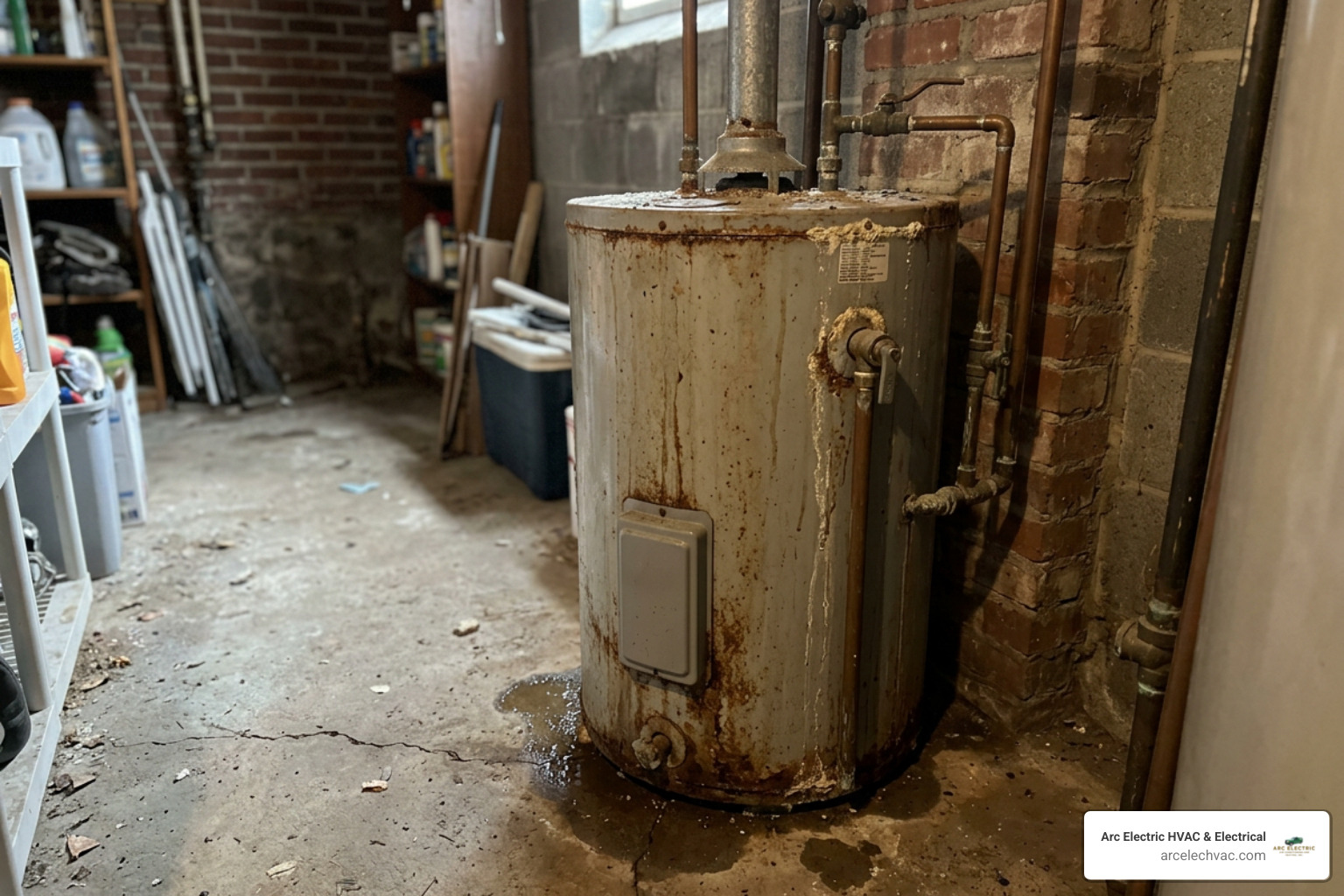
- Tank Base Leaks: Active water pooling around the bottom of the tank shell usually means internal corrosion has eaten through the steel inner lining. Internal tank cracks cannot be welded or patched—replacement is mandatory.
- Rust-Colored Hot Water: If rusty water flows exclusively from your hot water taps (and not the cold ones), the inside of your tank or sacrificial anode rod is decaying.
- Sediment Buildup & Rumbling Noises: As hard water minerals heat up, they settle at the bottom of the tank, forming a hardened crust. When the burner heats the water through this layer, you will hear loud popping, banging, or rumbling noises.
- Frequent Service Calls: If you’re constantly replacing heating elements, thermostats, or valves, those accumulated repair bills are better spent on a modern replacement.
The 50 Percent Rule for Plumbing Repairs
When evaluating a broken water heater, use the 50 Percent Rule: if a single repair quote costs 50% or more of the price of a brand-new unit—and your water heater is over 8 years old—replacement is the smarter long-term investment.
For instance, paying $450 to replace a complex gas control valve on an 8-year-old tank isn’t practical when a new, warrantied unit costs $1,000. If your system is experiencing minor electrical issues or ignition problems before reaching its age threshold, booking a timely heating system repair or plumbing checkup may resolve the issue without requiring a full swap.
Choosing the Right Water Heater Type and Size
Because water heating accounts for roughly 18% of your home’s total energy consumption, choosing the right system directly impacts your household utility budget.
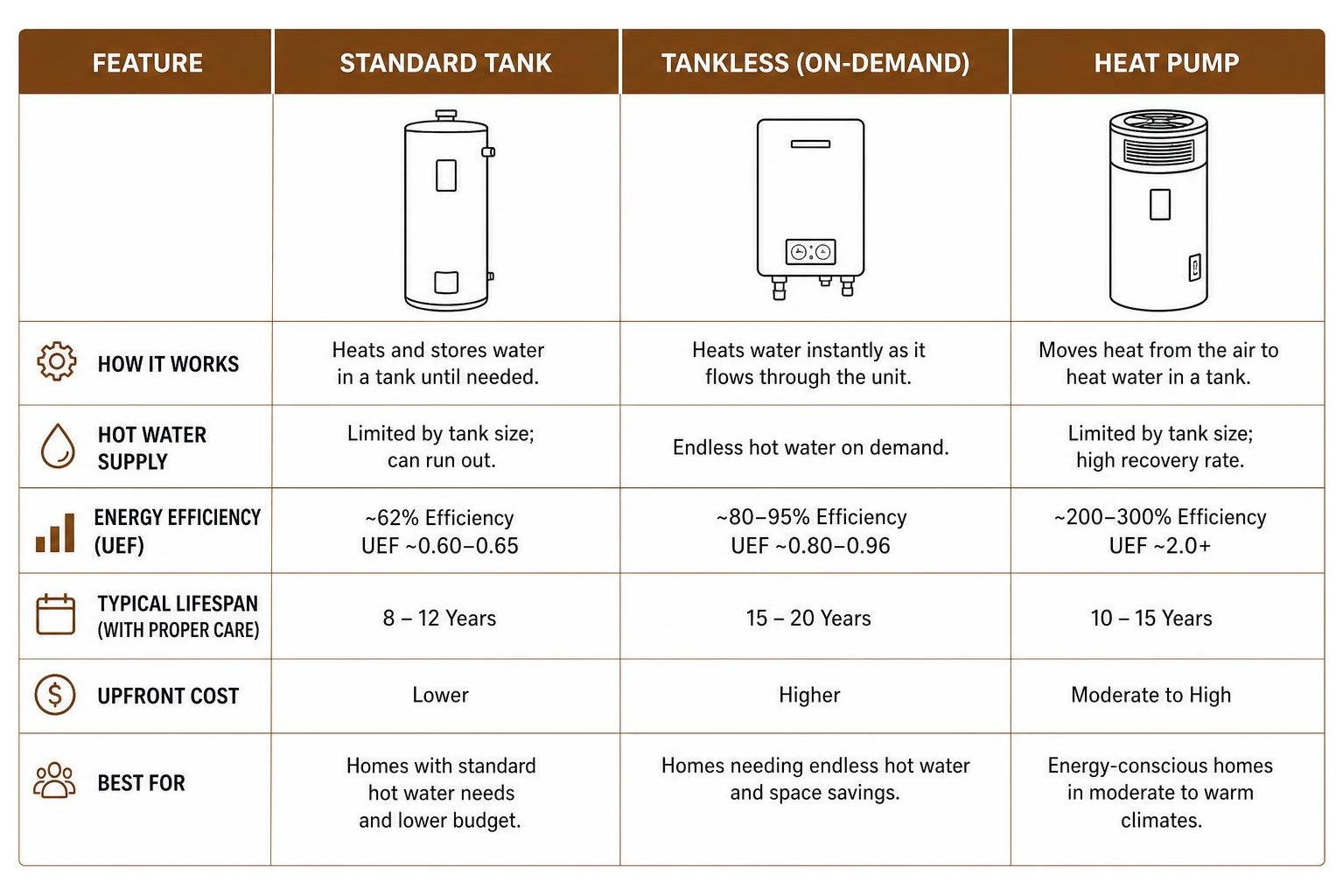
When shopping for replacement equipment, compare the unit’s Uniform Energy Factor (UEF). A higher UEF rating signifies greater energy efficiency:
Comparing Tank, Tankless, and Heat Pump Options
- Standard Tank Water Heaters (~62% Efficiency / UEF ~0.60–0.65)
- How it works: Keeps 30 to 80 gallons of water continuously heated 24/7.
- Pros: Lowest upfront equipment and installation cost.
- Cons: Higher annual operating costs due to continuous “standby” heat loss. An average family using a standard electric tank spends around $668 per year on hot water.
- Tankless Water Heaters (~95% Efficiency / UEF ~0.90–0.95)
- How it works: Heats water instantaneously using high-output gas burners or electric heating coils only when a tap is turned on.
- Pros: Endless hot water, compact wall-mounted footprint, and a 15–20 year lifespan.
- Cons: Higher initial equipment costs; gas conversions often require larger gas lines and dedicated venting.
- Hybrid Heat Pump Water Heaters (UEF up to 4.0)
- How it works: Pulls heat from surrounding ambient air and transfers it into the water tank—operating like a refrigerator in reverse.
- Pros: Extremely high energy efficiency. Heat pumps can reduce hot water energy bills by up to $600 per year (costing as little as $176 annually to operate).
- Cons: Requires adequate installation space (at least 700 cubic feet of surrounding air) and operates best in environments that stay above 40°F.
Sizing Guidelines by Household Hot Water Demand
Never size a tank water heater based solely on square footage. Instead, look at household occupancy and peak hot water demand (the maximum volume of hot water your home requires during a busy hour, such as morning showers and laundry runs).
For storage tank units, check the First-Hour Rating (FHR) listed on the yellow EnergyGuide label:
- 1 to 2 People: 30–40 Gallon Tank (FHR: 40–55 gallons)
- 2 to 3 People: 40–50 Gallon Tank (FHR: 55–70 gallons)
- 3 to 5 People: 50–75 Gallon Tank (FHR: 70–90 gallons)
- 5+ People: 75+ Gallon Tank (FHR: 90+ gallons)
For tankless units, size by flow rate in Gallons Per Minute (GPM) based on simultaneous fixture use:
- 1 Bathroom / Low Demand: 3 to 5 GPM
- 2 to 3 Bathrooms / Medium Demand: 6 to 8 GPM
- 3+ Bathrooms / High Demand: 8 to 11+ GPM
Installation Process and Hidden Upgrade Expenses
The time required for a Water Heater Replacement depends on system complexity. A like-for-like swap (replacing an old electric tank with a new electric tank in the exact same spot) usually takes just 2 to 3 hours. However, converting from a tank to a tankless unit or switching fuel sources takes 4 to 8 hours due to extra plumbing, gas piping, and venting modifications.
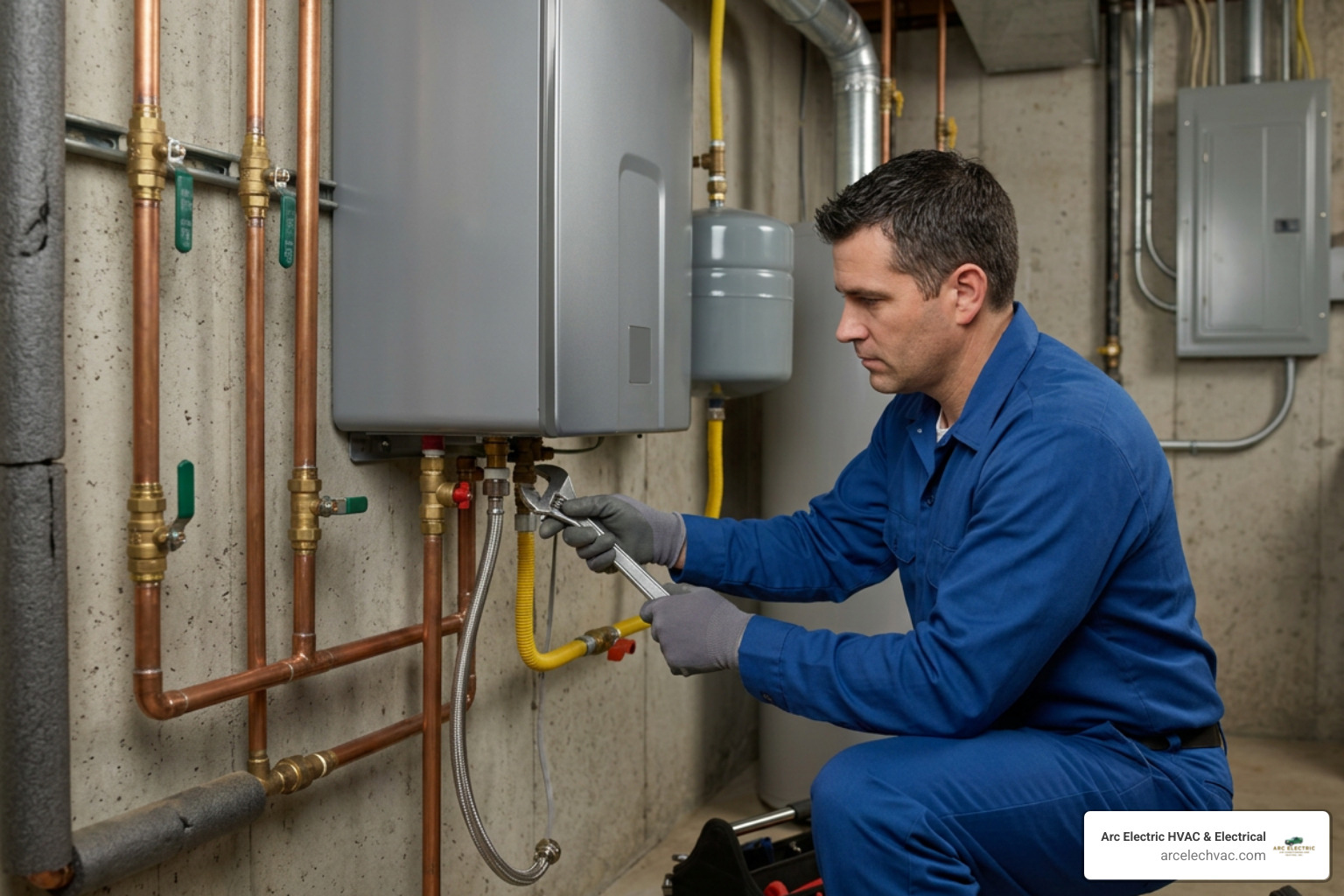
Professional Water Heater Replacement vs. DIY Installation
Homeowners often ask if installing an electric water heater themselves is worth the savings. While a DIY electric tank replacement can save $400 to $800 in labor, taking on this job carries real risks:
- Dry Firing Risk: The single most common DIY mistake is turning on the electrical breaker before the tank is completely full of water. This results in “dry firing,” which instantly burns out the upper heating element.
- Electrical and Gas Safety: Electric units draw heavy voltage (typically a dedicated 30-amp 240V circuit), while gas units carry risks of carbon monoxide leaks or gas explosions if mismanaged. If your upgrade requires panel work, always hire a licensed professional for electric installation work.
- Voided Warranties: Many major equipment manufacturers state in their warranty terms that coverage is void unless the unit is installed by a licensed plumbing contractor.
Hidden Expenses: Permits, Venting, and Expansion Tanks
Standard estimates don’t always reflect line-item site requirements. When budgeting for your project, keep these potential expenses in mind:
- Permit and Inspection Fees ($100 to $500): Most municipalities legally require a building permit and safety inspection for water heater replacements to ensure compliance with local building codes.
- Venting Upgrades ($500 to $1,000): Converting from an older atmospheric gas tank to a high-efficiency tankless or power-vent unit requires replacing standard metal exhaust pipes with specialized PVC/CPVC or concentric venting.
- Thermal Expansion Tanks (<$100 for hardware): Plumbing codes require an expansion tank on closed water systems to absorb build-ups in water pressure caused by thermal expansion.
- Gas Line Upsizing ($200 to $800): High-output gas tankless systems demand up to 199,000 BTUs of gas power, often requiring your installer to upsize your supply line from a standard 1/2-inch pipe to a 3/4-inch pipe.
Tax Credits, Rebates, and Essential Maintenance
Upgrading your hot water setup doesn’t have to drain your savings. Current federal policies and local utility programs offer substantial incentives for high-efficiency models.
Maximizing Savings with Incentives and Efficiency
Under the federal Inflation Reduction Act, buying a qualifying heat pump water heater makes you eligible for the Section 25C Energy Efficient Home Improvement Credit.

This tax credit covers 30% of the total project cost up to a maximum of $2,000, and is valid through 2032. Combined with annual bill savings of up to $600 per year and local electric utility rebates (which frequently offer an additional $500 to $850 cash back), a heat pump system often delivers the lowest net long-term cost of any system on the market.
Ongoing Care to Protect Your Investment
Once your new unit is up and running, consistent care protects your investment and ensures a full service life:
- Perform Annual Sediment Flushes: Drain a few gallons of water (or flush the full tank) once a year to clear mineral scale and sediment that degrades efficiency.
- Inspect and Replace the Anode Rod: Check the sacrificial anode rod every 3 to 5 years. Replacing a $30 rod when it wears down prevents internal tank corrosion and extends tank life by years.
- Set the Thermostat to 120°F: Keeping your water heater set to 120°F prevents scalding, slows down internal mineral scale accumulation, and saves energy.
- Schedule Routine Professional Inspections: Enrolling in a local preventative maintenance program helps catch minor valve leaks, expansion tank pressure issues, or electrical wear before they cause system downtime.
Frequently Asked Questions About Water Heater Replacement
How long does a water heater installation take?
A standard like-for-like tank replacement (such as swapping an old 40-gallon electric tank for a new one in the same spot) takes 2 to 3 hours. If you are converting from a tank to a tankless system, relocating the appliance, or modifying gas and venting lines, expect the process to take 4 to 8 hours.
Do I need a permit to replace my water heater?
Yes, most municipal building departments require a permit (typically $100 to $500) for water heater replacement. Permits verify that your installation complies with local building codes, including proper seismic strapping, T&P relief valve discharge piping, gas line sizing, and expansion tank installation.
Can I install a water heater myself to save money?
While a handy homeowner can save $400 to $800 in labor by performing a simple electric-to-electric tank swap, DIY installation carries significant risks—such as dry firing the upper element, electrical hazards, gas leaks, and voided manufacturer warranties. Gas systems, tankless conversions, and electrical panel upgrades should always be handled by a licensed professional.
Conclusion
A proactive Water Heater Replacement protects your home from sudden flooding and restores reliable hot water to your everyday routine. By recognizing early signs of failure, selecting the right capacity, and choosing an energy-efficient option like a heat pump or tankless model, you can lower your monthly energy costs for years to come.
When it’s time to replace your unit, work with reliable, licensed professionals who understand local code standards. At Arc Electric HVAC & Electrical, we bring over 70 years of honest, non-commissioned service to homeowners throughout Cincinnati, Ohio, and Northern Kentucky. With “no salespeople, just technicians,” our team provides transparent guidance to keep your utility systems running smoothly.
Ready to upgrade your home’s hot water or keep your equipment running reliably year-round? Contact us today to learn more about our installation services or sign up for a heating system maintenance plan.

